

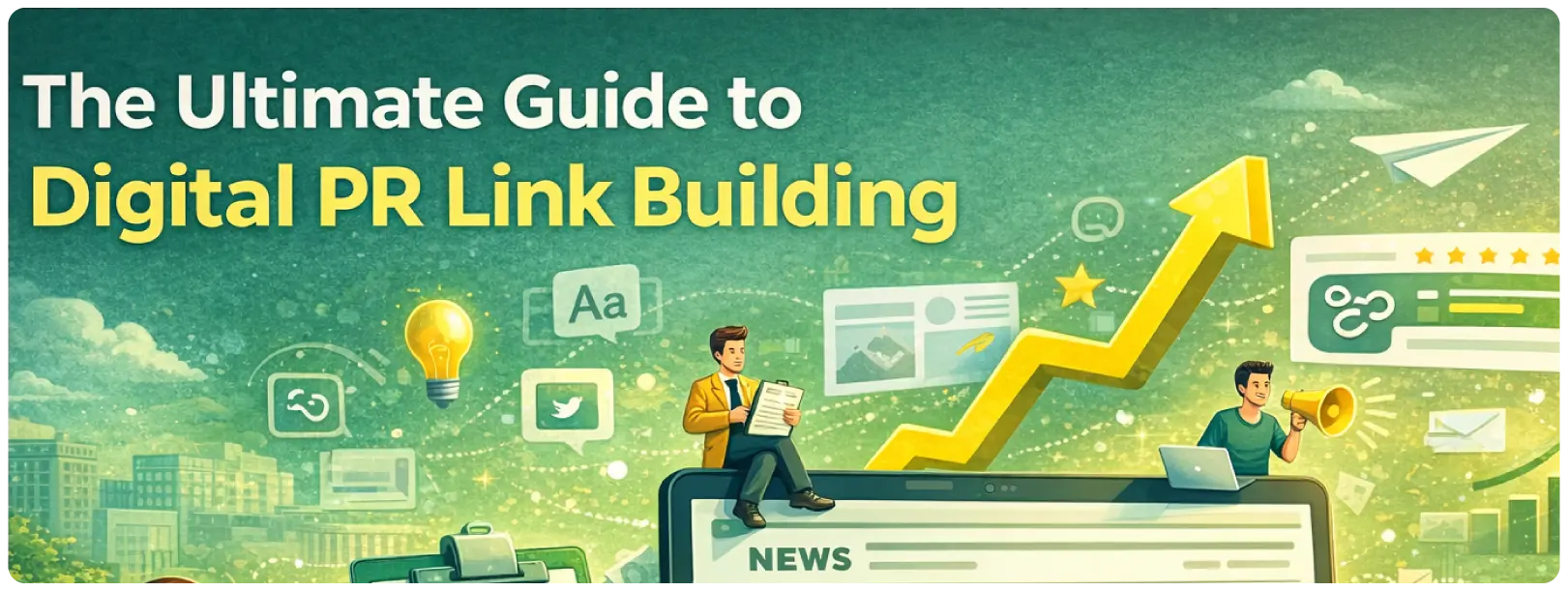
The Ultimate Guide to Digital PR Link Building
Digital PR is the highest-ROI link building strategy available in 2025. Here’s the complete playbook — from ideation to outreach to securing editorial placements on DR 70+ publications.
One editorial backlink from a DR 70+ publication can move rankings faster than 50 guest posts or outreach links combined. Digital PR earns those links by creating assets journalists genuinely want to cover — not by paying for placements or sending mass cold emails.
What Is Digital PR?
Digital PR is the practice of creating genuinely newsworthy content — data studies, original research, interactive tools, expert surveys — and pitching it to journalists and publishers who will cover it and link back to your site. Unlike traditional link building, you’re not asking for a favour. You’re giving journalists something worth writing about.
The links earned through digital PR are editorially placed, contextually relevant, and come from high-authority news sites, industry publications, and national media. These are the exact types of links that move rankings most significantly.
The best digital PR campaigns answer a question journalists are already asking, use data nobody else has, and are relevant to a story that’s already in the news cycle. Timeliness dramatically increases pick-up rates.
Why Digital PR Beats Traditional Outreach
Traditional guest posting and link outreach has become commoditised. Response rates are low, link quality has declined as Google devalues paid or exchanged links, and the time investment per link is high. Digital PR campaigns, by contrast, can earn 20–200 links from a single asset. The effort-to-impact ratio is incomparable.
The 6-Step Campaign Framework
Choose Your Campaign Type
The four most reliable digital PR formats are: original data studies (survey your customers, analyse public data), reactive PR (respond to breaking news with expert commentary using platforms like HARO or Qwoted), interactive tools or calculators (journalists love embedding useful tools), and annual index or ranking reports (create a recurring study that publications cite year after year).
Ideation and Research
Your campaign idea must pass the “would a journalist cover this?” test. Research trending topics in your industry using Google Trends, BuzzSumo, and Twitter/X. Look for data gaps — questions everyone is asking but nobody has answered with real numbers. Cross-reference with what’s already been covered to find fresh angles on familiar topics.
Create the Linkable Asset
Your asset is the content piece journalists will link to. For data studies: write a clean research page with clear methodology, key findings, and downloadable data. For tools: build something genuinely useful that people will bookmark and share. Quality matters — a poorly designed or shallow asset gets ignored even with a great pitch.
Build Your Targeted Media List
Use Ahrefs Content Explorer or BuzzSumo to find journalists who have written about similar topics. Look for writers at publications your target audience reads. Build a list of 50–150 targeted contacts — quality over quantity. A personalised pitch to 80 relevant journalists outperforms a mass email to 500 irrelevant ones every time.
Write a Journalist-Ready Pitch
Your pitch email must be under 150 words. Lead with the most surprising or counterintuitive finding from your data. Include the headline, key stat, and a link to your asset in the first three sentences. Reference a recent article they’ve written to show it’s personalised. Subject lines with numbers and specificity (“New study: 67% of UK SMEs have never checked their Google rankings”) dramatically outperform generic ones.
Send, Follow Up, and Scale
Send pitches Tuesday–Thursday, 8–10am in the recipient’s timezone. Send one follow-up 3–4 days later if no response — keep it short. Track responses in a CRM. Once a campaign is successful, repurpose the data for different angles and pitch to a new segment of your media list. Successful campaigns often have second and third waves of coverage.
Campaign Ideas Working in 2026
The formats earning the most links right now: salary and cost-of-living data studies by city or region, AI adoption surveys by industry, sustainability and environmental impact calculators, “state of the industry” annual reports, and interactive maps showing geographic data trends. Each of these gives journalists data they can’t find anywhere else — which is exactly what earns editorial links.
Want us to run a digital PR campaign for your business? Get in touch here and we’ll discuss campaign ideas suited to your niche and target publications.
Found this useful? Share it.
More SEO Insights

How to Conduct a Full Technical SEO in 2026
A step-by-step walkthrough of the exact audit process we run for every new client.
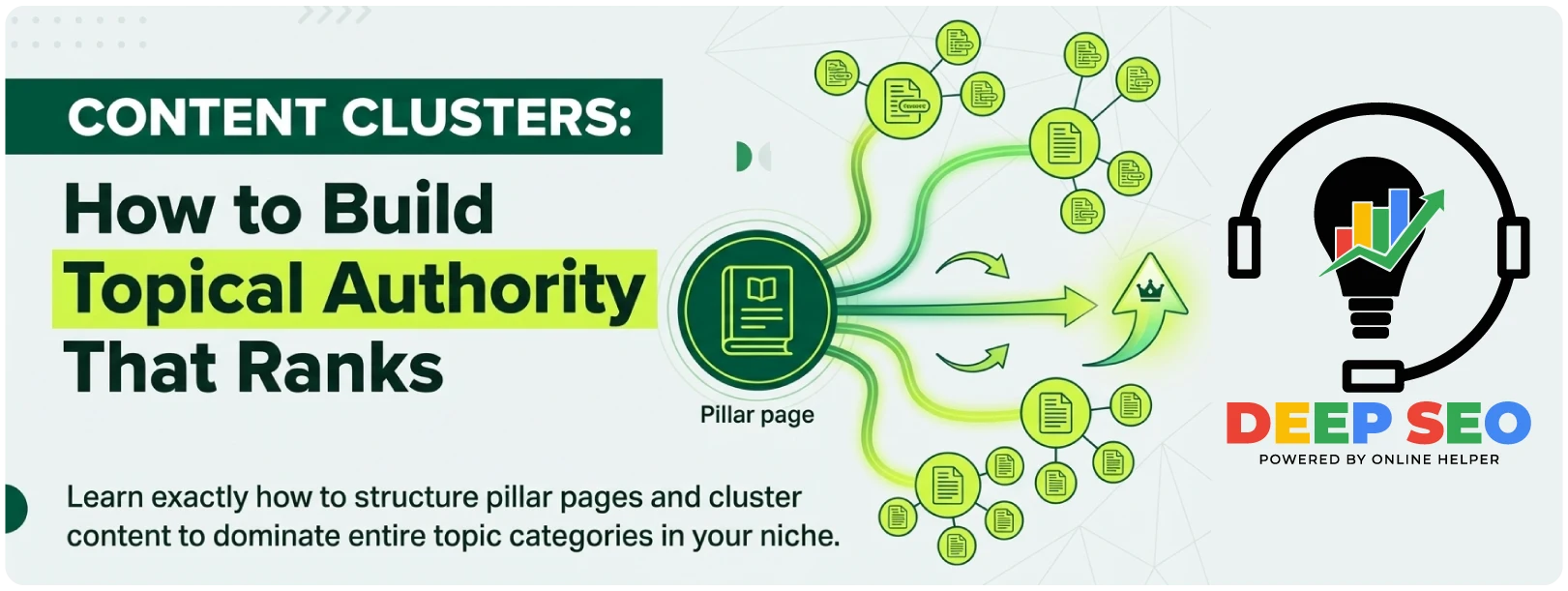
Content Clusters: How to Build Topical Authority That Ranks
Learn how to structure pillar pages and cluster content to dominate entire topic categories.

How to Find SEO Quick Wins in Google Search Console
The exact GSC filters we use to find pages one optimisation away from a major rankings jump.
