

How to Conduct a Full Technical SEO in 2026
A complete step-by-step walkthrough of the exact audit process we run for every new client — covering crawlability, indexation, Core Web Vitals, and more.
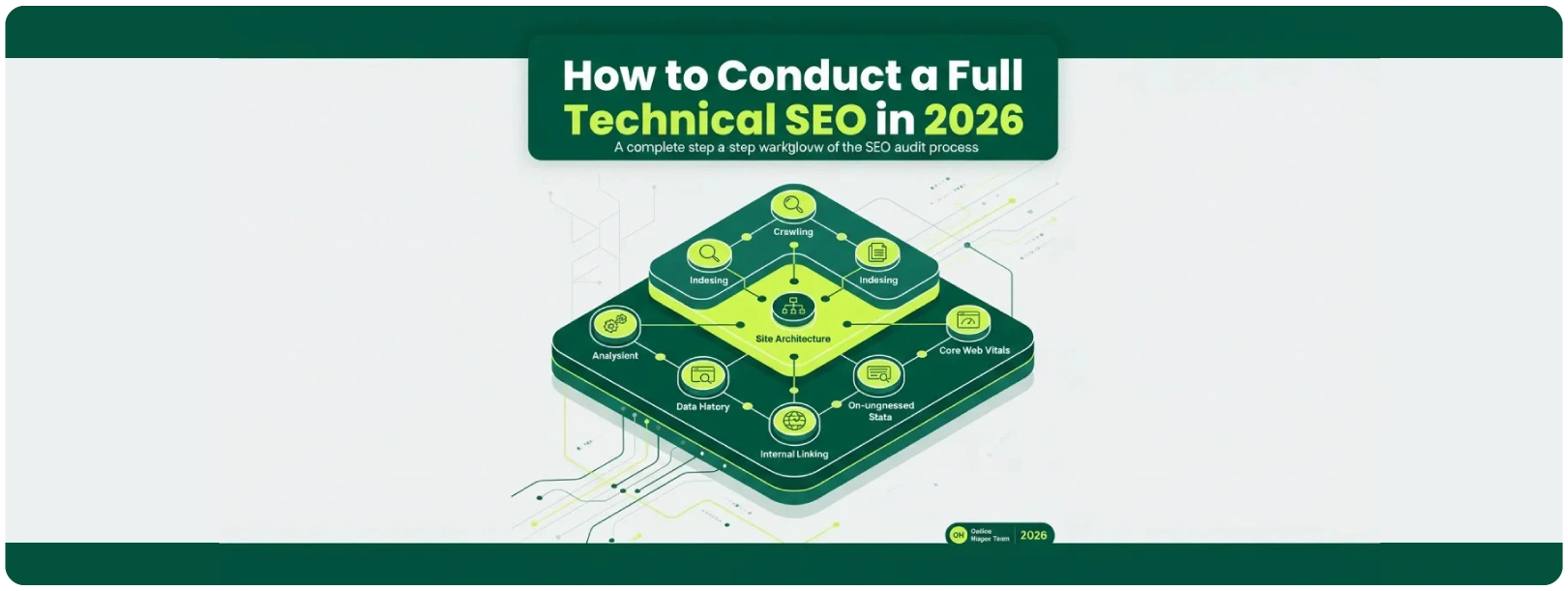
A technical SEO audit is the single most important starting point of any serious SEO campaign — and it is almost always the most underestimated one.
Here is a reality most SEO agencies won’t tell you: you can publish exceptional content, earn high-authority backlinks, and optimise every title tag on your site — and still rank nowhere near where you should be. Why? Because if your website has unresolved technical issues, Google either cannot find your pages, cannot render them correctly, or has no reason to prioritise crawling them over thousands of other URLs in its queue.
Technical SEO is the foundation that every other SEO activity is built on. Without a clean, crawlable, fast, and properly configured website, your content strategy and link building investments will consistently underperform. Fix the technical foundation first — and every other SEO activity you run on top of it will perform dramatically better.
This is the exact 8-step technical SEO audit process we run for every new client at Online Helper — the same process that helped one client unlock 203,000 additional monthly clicks by resolving a single indexation issue we identified in step two. We have refined this framework across dozens of client engagements over 6+ years, and it consistently surfaces the most impactful fixes available on any website, in the correct order of priority. Follow it from start to finish.
Why Technical SEO Still Matters in 2026
Many SEOs focus entirely on content and links while ignoring the technical foundation. The reality is that Google can’t rank pages it can’t crawl, and it won’t reward pages it can’t render quickly. A full technical audit identifies and removes every obstacle between your content and top rankings.
We run this audit every quarter for our retained clients and at the start of every new engagement — it consistently surfaces the biggest quick wins available.
Export your Google Search Console coverage report and crawl your site with Screaming Frog before beginning. You’ll need both throughout the audit.
The 8-Step Audit Process
Crawlability Check
Review your robots.txt file, XML sitemaps, and crawl directives. Make sure you’re not accidentally blocking important pages. Check for crawl traps like infinite pagination or session IDs in URLs.
Indexation Audit
Use GSC’s Coverage report to identify pages marked as “Excluded”, “Error”, or “Valid with warnings”. Cross-reference with your sitemap and fix discrepancies between what you want indexed and what Google has actually indexed.
Site Architecture Review
Ensure important pages are reachable within 3 clicks from the homepage. Flat site structures rank better. Identify orphan pages (no internal links pointing to them) — they’re invisible to Google.
Core Web Vitals Assessment
Check LCP, INP, and CLS in both GSC’s Core Web Vitals report and PageSpeed Insights. Focus on mobile scores first — they’re the primary signal. Fix server response time, render-blocking resources, and layout shift culprits.
On-Page Technical Signals
Audit all title tags and meta descriptions for duplicates, missing values, and over-length strings. Check H1 uniqueness across all pages. Review canonical tags — incorrect canonicals are one of the most common (and damaging) technical issues.
Structured Data Validation
Run your key pages through Google’s Rich Results Test. Validate your schema markup for articles, FAQs, products, and local business. Fix any errors or warnings — valid schema directly improves click-through rates via rich snippets.
Internal Linking Audit
Identify your highest-traffic pages and check how many internal links they’re receiving. Use anchor text strategically — it passes topical relevance signals. Fix broken internal links and remove redirected links from your navigation and content.
Mobile Friendliness & HTTPS
Run the Mobile-Friendly Test on all key templates. Verify your SSL certificate is valid, all pages load over HTTPS, and no mixed content warnings exist. Check for intrusive interstitials that could trigger a mobile penalty.
Tools We Use for Every Audit
The quality of a technical SEO audit is entirely dependent on the quality of the tools used to conduct it. Generic site health scores from all-in-one platforms are a starting point at best — they surface surface-level warnings but rarely provide the depth of diagnostic data needed to identify and prioritise the issues that actually move rankings.
Here is the exact tool stack we use on every technical SEO audit at Online Helper, and precisely what each tool is used for:
SCREAMING FROG SEO SPIDER
Screaming Frog is our primary crawl tool — the closest approximation to how Googlebot actually experiences your website. We run a full site crawl to map every URL, identify broken links (4xx errors), redirect chains, missing title tags and meta descriptions, duplicate content, missing canonical tags, orphaned pages with no internal links, incorrect noindex directives, and hreflang errors on multi-language sites. For larger sites, we also connect Screaming Frog directly to Google Analytics and GSC to layer traffic data on top of crawl data — so we can see not just what is broken, but which broken pages are hurting the most important URLs.
GOOGLE SEARCH CONSOLE (GSC)
GSC is the only tool that shows us exactly how Google sees your website — not how a third-party crawler approximates it. We review the Coverage report to identify pages that are excluded, errored, or valid with warnings. We cross-reference the Performance report to identify pages with high impressions but poor CTR (title and meta optimisation opportunities) and pages in positions 4-12 that are one optimisation away from page-one visibility. The Core Web Vitals report in GSC is particularly critical — it uses real Chrome user field data rather than lab simulations, giving us accurate LCP, INP, and CLS scores for the actual URLs that need fixing. The Crawl Stats report reveals how efficiently Googlebot is navigating your site and whether crawl budget is being wasted on low-value pages.
GOOGLE PAGESPEED INSIGHTS & CHROME DEVTOOLS
PageSpeed Insights provides both lab data (Lighthouse scores) and field data (Chrome User Experience Report) for any URL — giving us a precise breakdown of every performance issue affecting that page. We use it alongside Chrome DevTools to diagnose render-blocking resources, identify unoptimised images, audit JavaScript execution timelines, and pinpoint the exact elements causing largest Contentful Paint delays and Cumulative Layout Shift scores. For WordPress sites, this step directly informs our plugin configuration recommendations — telling us exactly what to enable or disable in WP Rocket, LiteSpeed, or Perfmatters to achieve passing Core Web Vitals scores.
AHREFS
Ahrefs is our primary tool for backlink profile analysis, internal link auditing, and competitive benchmarking during a technical audit. We use it to identify redirect chains in the internal link structure (common on sites that have migrated or changed URLs), broken internal links that are leaking link equity, and pages with unusually low internal link counts that should be receiving more. The Site Audit feature in Ahrefs provides a complementary crawl to Screaming Frog and sometimes surfaces issues the other tool misses — particularly around JavaScript rendering. We also use Ahrefs to benchmark our client’s technical health score against their top three organic competitors, giving us a clear picture of the technical gap we need to close.
GOOGLE RICH RESULTS TEST & SCHEMA.ORG VALIDATOR
Structured data issues are silent ranking suppressors — they generate no visible errors on your website, but they prevent your pages from earning the rich results and enhanced SERP appearances that can dramatically improve click-through rates. We validate every schema type present on your site — Article, FAQPage, LocalBusiness, Service, Product, BreadcrumbList — through both Google’s Rich Results Test and the Schema.org validator. Any error or warning is documented and fixed. We also check GSC’s Enhancements reports to confirm which schema types Google has already detected and whether any have been flagged for manual review.
MOBILE-FRIENDLY TEST & HTTPS CHECKER
Since Google uses mobile-first indexing, every page template we audit is tested through Google’s Mobile-Friendly Test tool. We check for viewport configuration issues, text size readability, tap target sizing, and intrusive interstitial elements. We also run a full HTTPS audit — verifying SSL certificate validity, identifying mixed content warnings (HTTP resources loaded on HTTPS pages), checking HSTS configuration, and confirming that all HTTP URLs correctly redirect to their HTTPS equivalents with no redirect chains.
Together, this six-tool stack covers every layer of the technical SEO landscape — from how Googlebot crawls your site at the server level, to how real users experience it in Chrome, to how Google interprets and rewards your structured data in search results. A thorough audit using this stack typically takes 4–8 hours for a medium-sized site (under 500 pages) and produces a prioritised fix list that we score by ranking impact and implementation effort — so your development resources are always focused on the changes that will move your organic traffic the most.
The issues this audit consistently surfaces have generated ranking improvements within 4–8 weeks of being resolved for our clients — including one engagement where a single indexation fix unlocked over 203,000 additional monthly clicks that had been suppressed for months.
Found this useful? Share it.
More SEO Insights
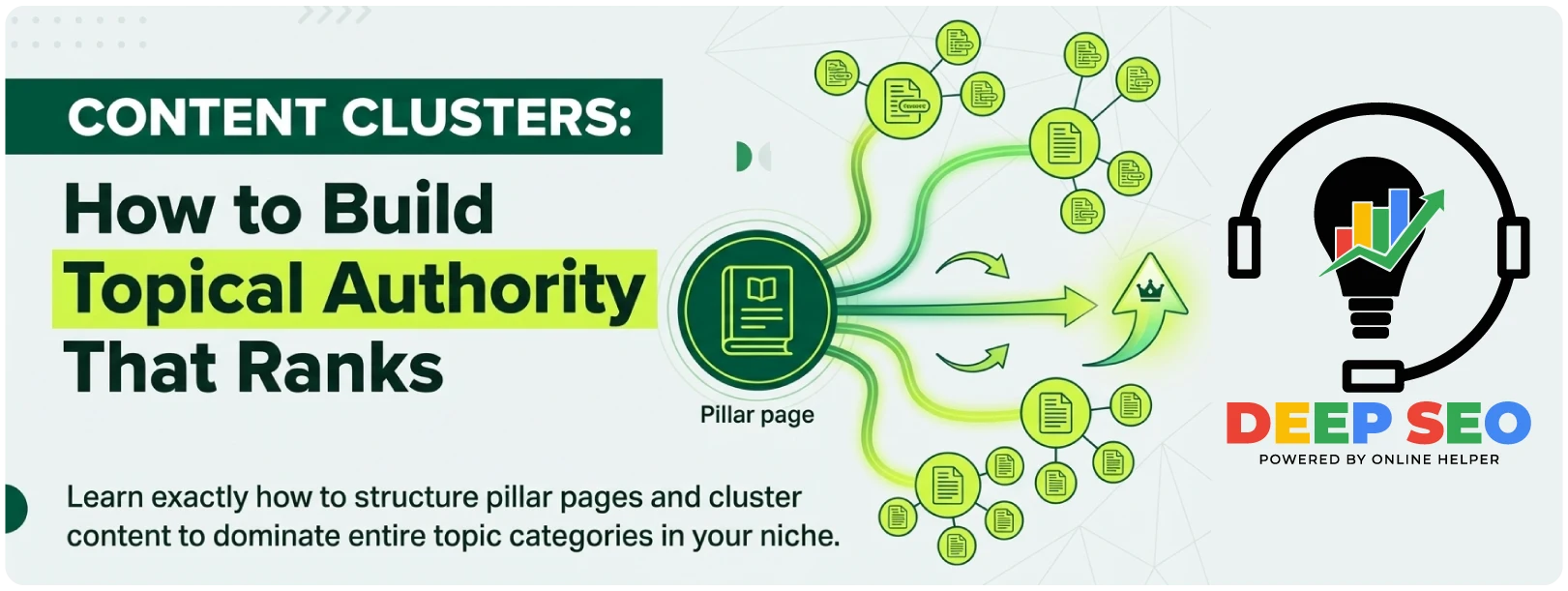
Content Clusters: How to Build Topical Authority That Ranks
A step-by-step walkthrough of the exact audit process we run for every new client.

10 Proven SEO Strategies to Dominate Google in 2026
Learn how to structure pillar pages and cluster content to dominate entire topic categories.
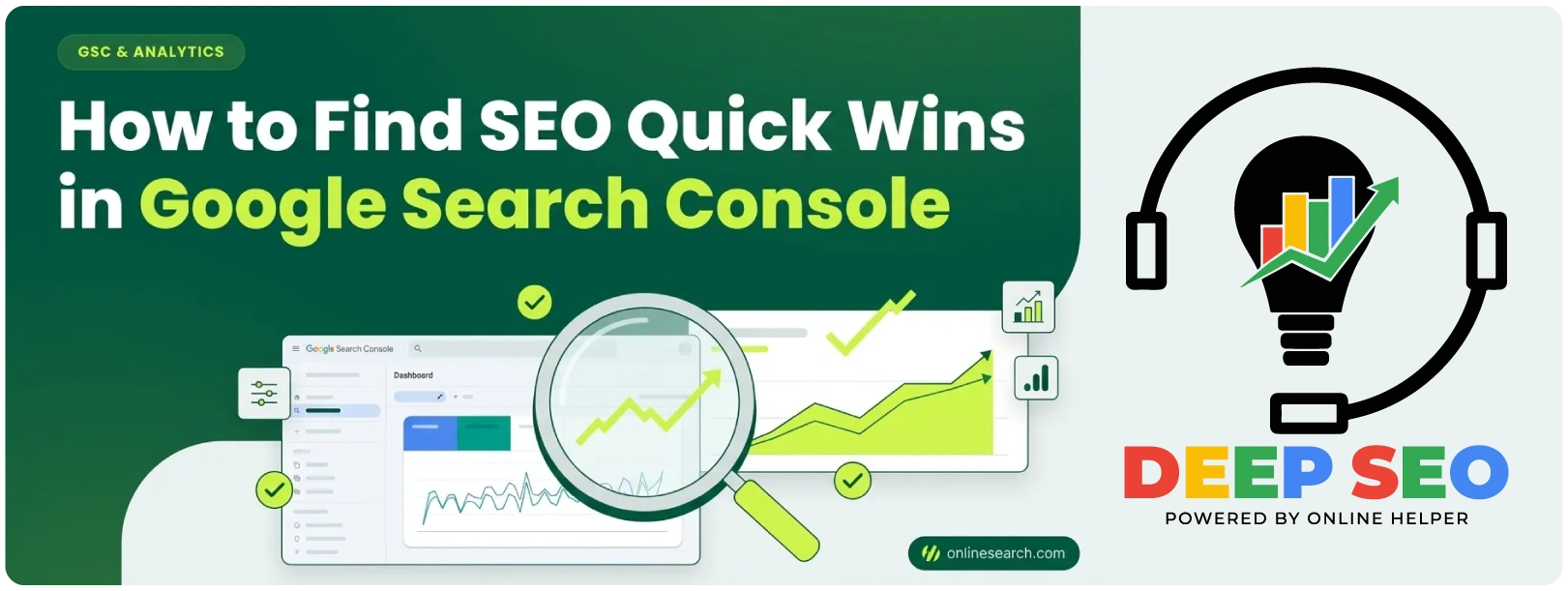
How to Find SEO Quick Wins in Google Search Console
The exact GSC filters we use to find pages one optimisation away from a major rankings jump.

